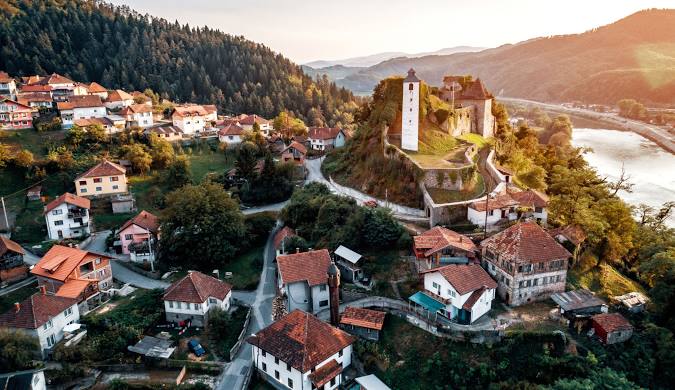
Maglaj: A Jewel in the Heart of Bosnia and Herzegovina
* Nestled along the banks of the Bosna River, Maglaj is a picturesque settlement that captivates with its nature and rich history. The first written record of this town dates back to 1399, when it was mentioned in the Charter of King Stjepan Ostoja. The name "Maglaj" is often associated with frequent occurrences of fog, and according to some theories, it may have roots in the ancient Illyrian tribe of Mezejima.
* Historical Overview
During the Middle Ages, Maglaj was a significant military center, well-fortified with strong walls and towers that protected its inhabitants. In the 15th century, the town was known as a burg in Gothic style, and its importance grew after coming under Ottoman rule. The first census during Ottoman authority dates back to 1485, while in 1408, King Sigismund resided in the town, issuing the charter "SUB CASTRO NOSTRO MAGLAJ." This charter is one of the few documents that testify to the life and social structures in the town during that period.
* Cultural Features
Today, Maglaj proudly boasts its rich cultural heritage. Notable landmarks include:
Kuršumlija Mosque: Built in 1560, it is considered one of the most beautiful examples of Ottoman architecture in the region. Its interior is adorned with exquisite details and calligraphy that reflect the craftsmanship of that time.
St. Leopold's Church: Constructed in the 20th century, this church serves as an important religious site for the local community. It also functions as a gathering place for cultural activities.
Prophet Elijah's Church: Established in 1909, this church further enriches the cultural landscape of the town and represents an important symbol of Orthodox heritage.
Maglaj Fortress "Gradina": A medieval fortress that witnesses the region's rich military history. Today, visitors have the opportunity to explore the remains of the fortress and enjoy panoramic views of the town.
* Natural Beauties
The surroundings of Maglaj offer untouched nature and beautiful picnic spots. Locations like Borik and Bistrica are ideal for recreation and relaxation. Here, visitors can enjoy hiking, cycling, or simply soaking in the natural beauty. The Bosna River provides opportunities for fishing and boating, while numerous hiking trails allow for exploration of the surrounding hills and forests.
* Cultural Events
Maglaj is also known for its cultural manifestations, including the "Students' Summer" Festival, which brings together youth from across the region. These events contribute to preserving traditions and strengthening the community. Throughout the year, various exhibitions, concerts, and performances promoting local artists and traditions are organized.
* The New Waterfront
One of the significant highlights along the riverside promenade is Delibeg's Inn, built in the 19th century, which was renovated in 2013 and now serves as a cultural center. Various ceremonies and events are held here, preserving the spirit of tradition. Strolling along the promenade, visitors can enjoy the blend of old and new, with stunning views of the town and its landmarks.
* Interesting Facts
In the city park, located near the promenade, there is a fountain that serves as a popular gathering spot. The park also houses one of the most beautiful libraries in Bosnia and Herzegovina, offering various programs for children and youth.
Additionally, a stećak (medieval tombstone), likely dating from the 12th to 15th century, is placed in the park, along with an intriguing stone sphere estimated to be around 12,000 years old, discovered in the Sikola tunnel. These artifacts testify to the rich cultural heritage and history of the region.
Maglaj is a town that combines a rich history, cultural landmarks, and natural beauty, making it a perfect destination for anyone wishing to explore the charms of Bosnia and Herzegovina. Whether you are a history enthusiast, a nature lover, or a culture buff, Maglaj has something for everyone. Visit Maglaj and discover all its hidden treasures!
|